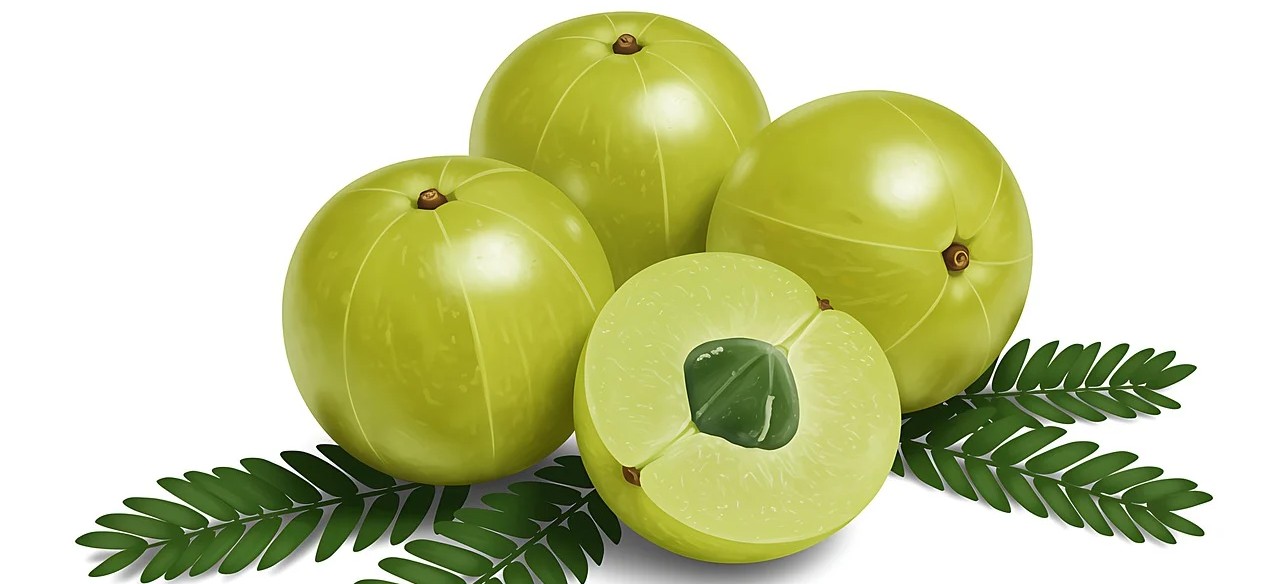
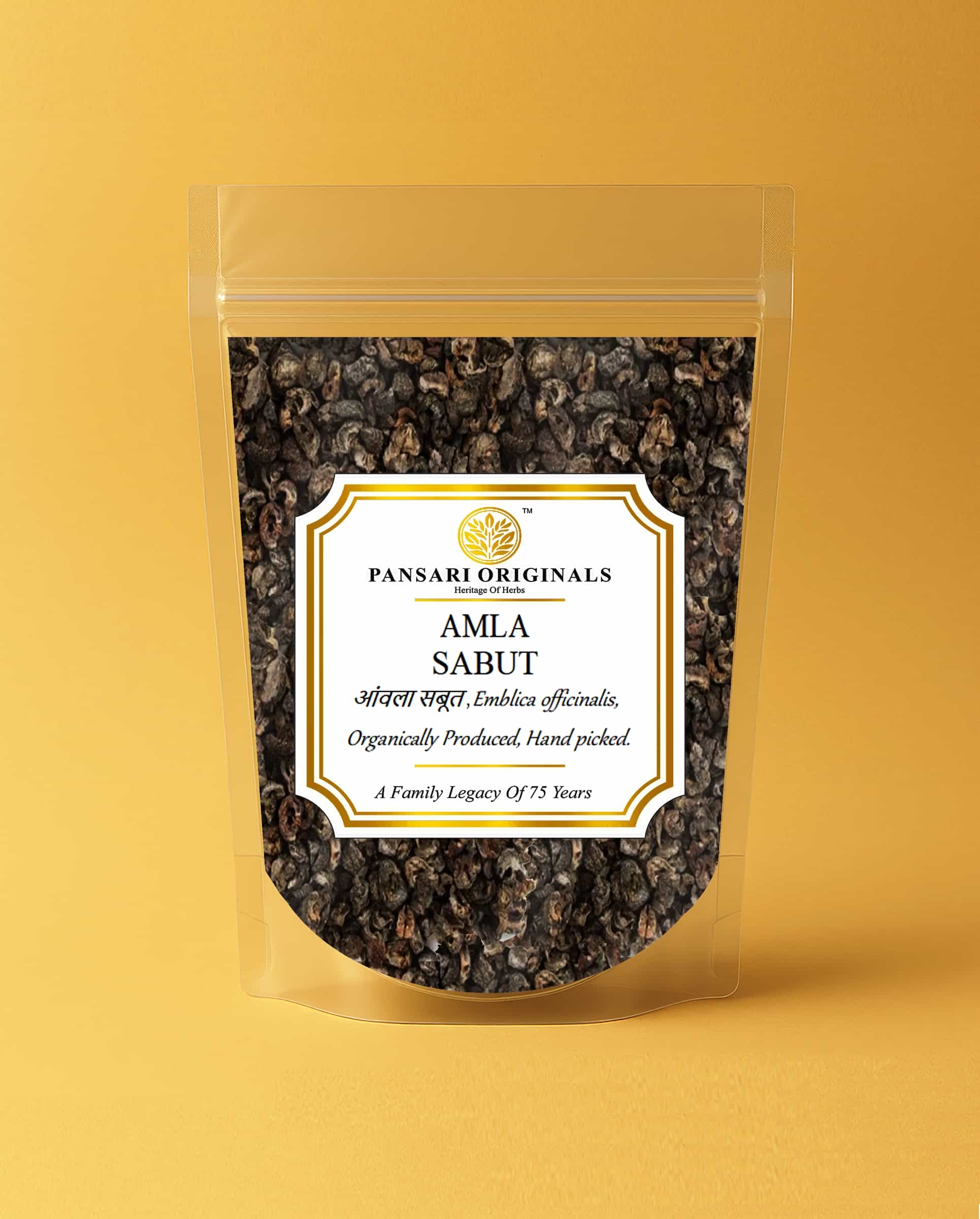
Amla, known as Āmalakī (आमलकी) in Ayurveda, is one of the most respected fruits in the classical Ayurvedic tradition. The Government of India’s Ministry of Ayush identifies Emblica officinalis Gaertn. (now also classified as Phyllanthus emblica L.) as Amla/Āmalakī, with the fruit being the medicinally used part. It is also officially included in the Ayurvedic Pharmacopoeia of India.
What makes Amla particularly interesting is that Ayurveda does not look at it simply as a source of one nutrient. It looks at the whole fruit, its taste, qualities, effect on the doshas, digestion, tissues and long-term vitality. This broader view explains why Amla has remained important in Ayurvedic diet and Rasayana therapy for centuries.
Amla is more than a “vitamin C fruit”
Today, Amla is often introduced as a fruit rich in vitamin C and antioxidants. That description is not wrong, but it is incomplete from an Ayurvedic perspective.
The classical texts place Amla in several important groups of medicinal substances. In the Charaka Samhita, Āmalakī is included in the Vayasthāpana Mahākaṣāya, a group associated with maintaining youthfulness, and also in groups described for supporting the management of cough, fever and certain skin disorders.
(Caraka Samhita Online)
Key Ayurvedic perspective
Ayurveda considers Amla a rejuvenating food as well as a medicinal substance.
Why Ayurveda considers Amla a Rasayana
The word Rasayana is often translated as “rejuvenation therapy”. But it is better understood as an approach aimed at maintaining the quality of the body’s tissues, strength and vitality.
The Charaka Samhita gives Amla a particularly important place in Rasayana therapy. It describes preparations such as Amalaki Rasayana and Amalaki Ghrita, using Amla as a central ingredient. These are not modern supplements; they are classical formulations described within the Rasayana section of the text.
(IJIM)
In simple terms, Ayurveda’s interest in Amla is not merely about treating an occasional problem. It is also about supporting the body over the long term.
Amla and healthy ageing
This is perhaps one of Amla’s most distinctive Ayurvedic benefits.
Charaka includes Āmalakī among the Vayasthāpana drugs; literally, substances associated with maintaining youthful qualities. Classical Ayurvedic literature therefore connects Amla with the preservation of vitality rather than promising to “stop ageing”.
That distinction matters. Ayurveda does not mean that eating Amla will prevent ageing. Rather, the traditional concept is that good Rasayana practices help maintain strength, functional capacity and quality of life as one grows older.
(Caraka Samhita Online)
For middle age and beyond, this is arguably a more sensible way to understand Amla than the modern marketing language of “anti-ageing”.
Amla and the three doshas
Ayurveda also evaluates food according to its Rasa (taste), Guna (qualities), Virya (potency) and Vipaka (post-digestive effect).
Amla is unusual because, although its dominant taste is sour, classical descriptions attribute five of the six tastes to it; sour, sweet, bitter, pungent and astringent, while salt is absent. It is described as cooling in potency and sweet in its post-digestive effect.
(Caraka Samhita Online)
Rasa • Guna • Virya • Vipaka
These classical concepts help explain how Ayurveda evaluates foods beyond their nutritional composition.
This combination is one reason Amla occupies such a special position in Ayurveda. It is not simply “sour” in the way we normally think about sour foods.
Its cooling nature is especially important
In Ayurvedic terms, Amla’s Śīta (cooling) Virya makes it particularly interesting when considering Pitta.
This does not mean that Amla should be thought of as a treatment for every condition associated with Pitta. Rather, its classical properties help explain why Amla is traditionally used in preparations intended to balance excessive heat and why it has such a strong presence in Rasayana formulations.
The Government of India’s CCRAS literature also records Amla-based preparations for traditional conditions associated with burning sensations and Pitta aggravation.
(CCRAS)
Amla and Digestion
Good health in Ayurveda begins with Agni, the body’s capacity to digest and transform food properly.
Amla has an interesting place here because it is sour and therefore naturally stimulating to the appetite, yet its complete Ayurvedic profile is more complex than that of an ordinary sour food.
Classical sources use Āmalakī in several digestive preparations, and Government-supported CCRAS material lists Amla among traditional remedies used for digestive complaints such as acidity and constipation.
(CCRAS)
This is also why Amla is better viewed as a food with medicinal qualities, rather than as a medicine that everyone should take in large quantities.
Ayurvedic texts use Amla in different formulations depending on the condition and the accompanying substances.
For example, CCRAS’s Ayurvedic Home Remedies describes powdered Amla fruit rind or Amla juice among traditional options for constipation.
(CCRAS)
However, there is an important practical point: the form in which Amla is taken matters. Fresh fruit, juice, preserved Amla and classical Rasayana preparations are not interchangeable. Their properties and appropriate quantities can differ.
Amla and the Eyes
Classical Ayurveda also associates Amla with Chakṣusya, meaning supportive of the eyes.
This should not be interpreted as a claim that Amla can cure eye disease or replace an eye examination. Instead, it reflects the traditional understanding that Amla is supportive of the sensory organs and overall tissue health.
This broader connection with the senses is also visible in classical Rasayana preparations, where Amla is used in formulations intended to support strength of the sense organs.
(IJIM)
Amla and the Respiratory System
Amla is also included by Charaka in the Kāsahara Mahākaṣāya, a classical group of substances associated with alleviating cough. It is also mentioned in the Jvarahara Mahākaṣāya, associated with fever.
(Caraka Samhita Online)
Again, the important point is not that eating an Amla will cure a cough or fever. Ayurveda generally uses specific formulations, combinations, dosage and dietary instructions according to the individual condition.
Amla’s presence in these classical groups tells us about its traditional therapeutic range.
Amla and the Skin
Amla’s relationship with healthy skin also has a classical basis.
Charaka places Āmalakī in the Kuṣṭhaghna Mahākaṣāya, a group of substances traditionally associated with skin disorders.
(Caraka Samhita Online)
This fits with Ayurveda’s larger understanding of skin health: the skin is not viewed in isolation. Digestion, nutrition, tissues, doshas and overall health are interconnected.
Therefore, when Ayurveda speaks about a herb supporting skin health, it does not necessarily mean applying that herb directly to the skin.
Amla and Hair
Amla has also become famous in traditional Indian hair care, and this reputation has a long history.
CCRAS’s Government of India publication on Ayurvedic home remedies describes traditional use of Amla preparations for hair fall, premature greying and dandruff, including external application of preparations made from the fruit rind.
(CCRAS)
It is worth keeping the claim in proportion. Traditional use does not mean that Amla can reverse every type of hair loss or greying. Hair problems can have many causes and may require proper evaluation.
Amla’s role in strength and nourishment
Another important Ayurvedic concept is Bala, or strength.
Government-supported Ayurvedic material describes Amla preparations such as Amalaki Murabba as Bala-vardhaka, meaning supportive of strength.
(CCRAS)
This makes Amla particularly interesting as part of a balanced diet. Its traditional role is not limited to one organ or one symptom; it is repeatedly used in formulations intended to support the body’s overall resilience.
Amla in modern Ayurvedic practice
Amla continues to appear in official Ayurvedic literature and guidance issued by institutions under the Ministry of Ayush. The Government of India’s e-Charak database lists Amla as Emblica officinalis and identifies the fruit as the part used.
(echarak.ayush.gov.in)
The Pharmacopoeia Commission for Indian Medicine & Homoeopathy also maintains official monographs for fresh Amla, dried Amla, Amla powder and other Amla preparations under the Ayurvedic Pharmacopoeia of India.
(PCIMH Portal)
This is important because it separates classical, identified Ayurvedic material from the many commercial products that simply use the word “Amla” on their labels.
Note: The benefits above describe Ayurvedic/classical uses and should not be read as claims that Amla can diagnose, prevent or cure a medical condition. For therapeutic doses or concentrated preparations, consultation with a qualified Ayurvedic physician is appropriate.
Frequently Asked Questions
1. Can I eat Amla every day?
Yes, Amla can generally be included in the daily diet in a suitable form and quantity. For medicinal use, the appropriate dose depends on the individual.
2. Is Amla good for all three doshas?
Amla is traditionally considered Tridosha-shamaka, though its cooling nature makes it particularly useful for balancing aggravated Pitta.
3. What is the best way to consume Amla?
Fresh Amla, Amla juice, and traditional preparations are all used in Ayurveda. The most suitable form depends on the purpose and the individual.
4. Can Amla help with hair fall and premature greying?
Amla has a long history of traditional use for hair care, including hair fall and premature greying. However, persistent hair problems may have other underlying causes.
5. Is Amla the same as a vitamin C supplement?
No. While Amla naturally contains vitamin C, it is a fruit with a range of nutrients and traditionally recognized properties. It should not automatically be considered equivalent to a vitamin C supplement.