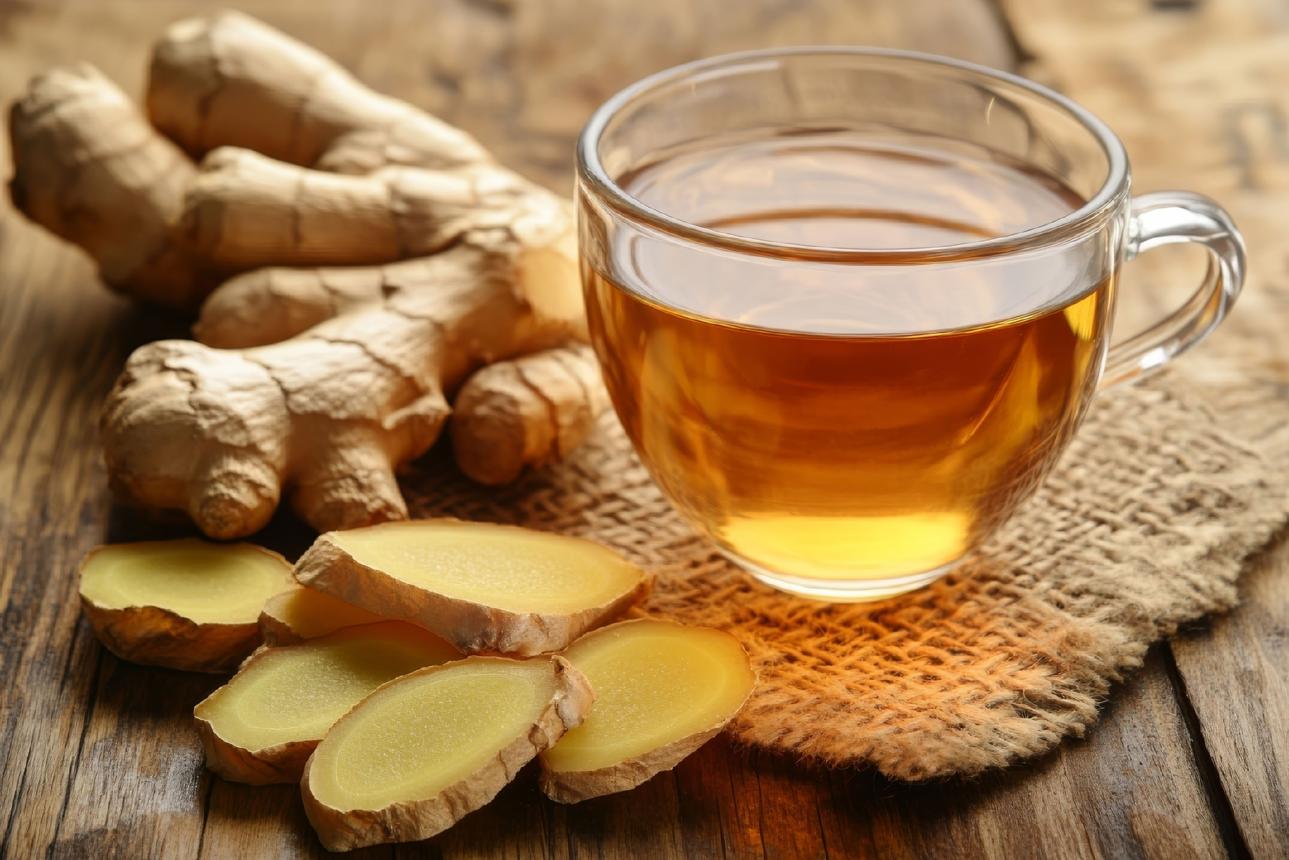
There is a good chance you have had ginger today without giving it much thought.
Perhaps it was in your morning chai. Maybe your mother added it to a home remedy when you had a sore throat. Or you have used it in cooking, where its sharp, warm flavour makes even a simple dish more interesting.
Ginger is one of those ingredients that feels so familiar that we rarely stop to ask a question:
How did something we use in our kitchens become a part of traditional medicine across the world?
For centuries, ginger has been used in traditional healing systems, including Ayurveda, for digestive discomfort, nausea, and other everyday complaints. Modern research has also investigated some of these uses, with promising findings in certain areas and less convincing evidence in others.
That distinction matters.
Because ginger is interesting enough without making claims it cannot support.
Let’s explore five traditional uses of ginger, what research tells us, and why this small, knobbly rhizome has remained relevant for so long.
1. Ginger for Digestive Discomfort: The Traditional After-Meal Companion
Think about a heavy meal.
You have eaten more than usual, and a while later, you feel uncomfortable. Your stomach feels unsettled, or you experience mild nausea.
In many households, ginger is one of the first ingredients that comes to mind.
Traditional practices across different cultures have used ginger to support digestion and relieve stomach discomfort. In Ayurveda, ginger (Zingiber officinale) has a long history of use in digestive preparations.
But what does modern research say?
Researchers have investigated ginger’s effects on gastrointestinal symptoms, including nausea and digestive discomfort. A systematic review of clinical trials found evidence supporting ginger’s role in relieving nausea, while noting that research for several other gastrointestinal conditions remains limited.
One possible reason ginger attracts scientific interest is its effect on gastrointestinal movement. Some research has explored whether ginger may influence gastric emptying, although findings depend on the condition, preparation, and study design.
What Should You Take Away?
Ginger has a traditional digestive reputation, and research supports its potential for certain symptoms, especially nausea. That does not mean it can treat every digestive problem or that discomfort should automatically be treated with ginger.
Sometimes, the most useful thing is to understand what your body is telling you.
Traditional use:
Digestive support and relief from stomach discomfort.
What research suggests:
Ginger may help with nausea, but evidence for other digestive conditions is more limited.
2. Ginger and Nausea: One of Its Most Studied Uses
Here is a situation many people recognise.
You are travelling on a winding road. The vehicle keeps turning, your stomach begins to feel uneasy, and suddenly you wish you had stayed home.
Or perhaps nausea appears for another reason.
Ginger has been studied as a possible way to relieve nausea, and this is one of the areas where its traditional reputation has received meaningful scientific attention.
Researchers have examined ginger for different types of nausea, including nausea during pregnancy and after certain medical procedures.
A systematic review published in 2014 analysed 12 randomised controlled trials involving 1,278 pregnant women. The review found that ginger improved nausea symptoms compared with a placebo, although its effect on the number of vomiting episodes was not statistically significant.
Another systematic review published in 2013 found that ginger performed better than a placebo in the included trials for pregnancy-related nausea and vomiting. However, the researchers also noted uncertainty about dosage, treatment duration, and possible drug interactions.
So, what is the honest conclusion?
Ginger may help with nausea, but the strength of evidence depends on the specific situation. Results from studies using ginger supplements cannot automatically be applied to a cup of ginger tea or a small piece of fresh ginger.
A Small but Important Distinction
A traditional remedy can be worth exploring without treating it as a guaranteed medical solution.
If you experience persistent vomiting, severe nausea, or symptoms during pregnancy that interfere with eating and drinking, consult a healthcare professional.
Traditional use:
Relief from nausea and stomach uneasiness.
What research suggests:
Evidence supports a potential benefit for nausea, particularly in pregnancy, although the research has limitations.
3. Ginger During Menstrual Discomfort: An Interesting Area of Research
Menstrual cramps can turn an ordinary day into a difficult one.
For some people, the pain is mild and manageable. For others, it can interfere with work, studies, sleep, and everyday activities.
Ginger has a history of traditional use for various types of pain, and researchers have investigated whether it might help with menstrual discomfort.
A systematic review and meta-analysis published in 2015 examined randomised clinical trials involving ginger for primary dysmenorrhea, the medical term for painful menstrual cramps.
The researchers found suggestive evidence that ginger could reduce pain intensity. The review included four randomised trials in its meta-analysis and reported benefits from ginger powder used during the first few days of the menstrual cycle.
However, the evidence should be interpreted with care. The number of studies was small, and findings from specific supplement doses do not establish that every form of ginger will produce the same result.
Why Is This Interesting?
Ginger is often discussed as a food ingredient, but its chemical constituents have also become the subject of research into inflammation and pain pathways.
That does not mean ginger is a substitute for medical treatment. It means that a familiar kitchen ingredient can raise questions worth investigating scientifically.
If menstrual pain is severe, new, or regularly disrupts your daily life, it deserves appropriate medical assessment.
Traditional use:
Support for menstrual comfort and pain.
What research suggests:
Some clinical evidence indicates ginger may reduce menstrual pain, but more research is needed to establish the most effective preparations and doses.
4. Ginger as a Warming Ingredient in Traditional Practices
This is where ginger becomes especially interesting.
In many traditional food and healing practices, ginger is associated with warmth.
You see it in hot drinks, cooked meals, herbal preparations, and seasonal home remedies. In Ayurveda, ginger has been described and used in preparations connected with digestion and other aspects of health.
But what does “warming” actually mean?
It is important not to treat a traditional description as a direct scientific measurement. The word can refer to a sensory experience, a traditional classification, or a broader understanding of how an ingredient is used.
When you eat fresh ginger, its characteristic heat comes partly from compounds such as gingerols. Dried ginger undergoes changes in its chemical composition, including the formation of compounds such as shogaols.
These compounds are one reason researchers are interested in ginger’s biological activity.
Laboratory studies have explored ginger’s antioxidant and anti-inflammatory properties. However, findings in a laboratory do not automatically establish that eating ginger will prevent or treat a disease in humans.
The Lesson Here
Traditional knowledge can provide useful questions for modern research. Science then needs to investigate those questions through appropriate studies.
Both perspectives can be discussed without confusing traditional belief with proven clinical effectiveness.
Traditional use:
Ginger as a warming ingredient in food and traditional preparations.
What research suggests:
Ginger contains biologically active compounds, but laboratory findings should not be presented as proof of specific health outcomes in humans.
5. Ginger in Everyday Wellness: A Familiar Ingredient with Limits
There is something appealing about ingredients that have a place in ordinary life.
Ginger does not require a complicated routine. It can be used in cooking, added to a drink, or included in a traditional preparation.
That accessibility is one reason people continue to explore it.
Modern research has investigated ginger for a range of outcomes, including nausea, pain, metabolic health, and inflammation-related markers.
An umbrella review published in 2022 examined 24 systematic reviews. It reported the strongest evidence in that review for ginger’s antiemetic effects in pregnant women and small analgesic effects in osteoarthritis. Evidence for several other outcomes was less certain, with differences in study quality, preparation, and dosage.
This is a useful reminder that the phrase “natural wellness” covers a very broad range of claims.
A food ingredient can be nutritious and useful without being a cure-all.
Ginger can be part of a varied diet, but it should not replace prescribed treatment or become a reason to ignore symptoms that need attention.
A Practical Approach
Use ginger as a food ingredient in ways you enjoy. If you are considering concentrated supplements, especially while taking medication or during pregnancy, discuss their suitability with a healthcare professional.
Traditional use:
Everyday dietary and wellness practices.
What research suggests:
Ginger shows potential for some health outcomes, but the quality and certainty of evidence vary considerably.
Ginger is commonly consumed as a food, and dietary use appears generally safe for many people.
However, more is not always better.
Concentrated supplements may differ from the quantities normally used in food. Some people may experience side effects such as heartburn, stomach discomfort, or diarrhoea.
The appropriate amount can also depend on the preparation, the person’s health, and other medications they may be taking.
Consider speaking with a healthcare professional before using ginger supplements if you:
Are pregnant or breastfeeding and are considering concentrated preparations.
Take medications that may interact with ginger.
Have a medical condition that could be affected by supplements.
Experience persistent or unexplained symptoms.
Research has not established one universal dose that is appropriate for every person and every purpose.
The fact that an ingredient is traditional does not remove the need for sensible use.
Fresh Ginger, Dried Ginger, and Ginger Tea: Are They the Same?
Not exactly.
Fresh ginger and dried ginger contain many of the same broad classes of compounds, but processing can change their chemical composition.
Fresh ginger is commonly used in cooking and beverages. Dried ginger is used in spice blends and traditional preparations. Ginger tea is another popular way to consume the ingredient.
The amount of ginger you consume, how it is prepared, and whether it is combined with other ingredients can all influence what you receive.
This is especially important when reading research.
A study on a standardised ginger supplement cannot automatically tell us what will happen after drinking a cup of homemade ginger tea.
The ingredient may be similar, but the preparation and dose matter.
Frequently Asked Questions
1. What is ginger traditionally used for?
Ginger has traditionally been used for digestive discomfort, nausea, pain-related complaints, and in warming food and herbal preparations. Traditional use does not establish that it treats a medical condition.
2. Can ginger help with nausea?
Research suggests ginger may help reduce nausea, especially in some pregnancy-related studies. Results vary depending on the situation, and ginger should not automatically replace medical care.
3. Is fresh ginger better than dried ginger?
Neither can be called universally better. Fresh and dried ginger differ in preparation and chemical composition. The best choice depends on how you intend to use it.
4. Can ginger help with menstrual cramps?
Some clinical studies suggest that ginger may reduce menstrual pain. However, research has limitations, and severe or persistent menstrual pain should be assessed by a healthcare professional.
5. Can I consume ginger every day?
Ginger is commonly consumed as a food. Whether daily concentrated supplementation is appropriate depends on the dose, preparation, and individual circumstances.
6. Does ginger cure digestive problems?
No. Ginger may help with certain symptoms, particularly nausea, but it has not been established as a cure for all digestive conditions. Persistent symptoms warrant appropriate medical advice.
Daily JW et al. (2015). Efficacy of Ginger for Alleviating the Symptoms of Primary Dysmenorrhea. Pain Medicine.
PubMed
Viljoen E et al. (2014). A systematic review and meta-analysis of ginger in pregnancy-associated nausea and vomiting. Nutrition Journal.
PubMed
Li H et al. (2019). Ginger for health care: An overview of systematic reviews. Complementary Therapies in Medicine.
PubMed
Anh NH et al. (2020). Ginger on Human Health: A Comprehensive Systematic Review of 109 Randomized Controlled Trials. Nutrients.
PubMed
Disclaimer
This article is intended for educational purposes only. It is not medical advice, and ginger should not be used as a substitute for professional diagnosis or treatment. Individual responses may vary.